
What is Sleep?
Sleep is a natural state of reduced activity which marked by dynamic changes in brain wave activity, breathing patterns, heart rate, body temperature, and other physiological functions. These tightly regulated changes reflect an active and coordinated process in the brain, rather than a passive shutdown—providing the basis for understanding sleep-wake regulation.
Sleep-Wake Regulation
The sleep-wake system is thought to be regulated by the interplay of two major processes, one that promotes sleep (process S) and one that maintains wakefulness (process C).
Two primary processes govern this regulation:
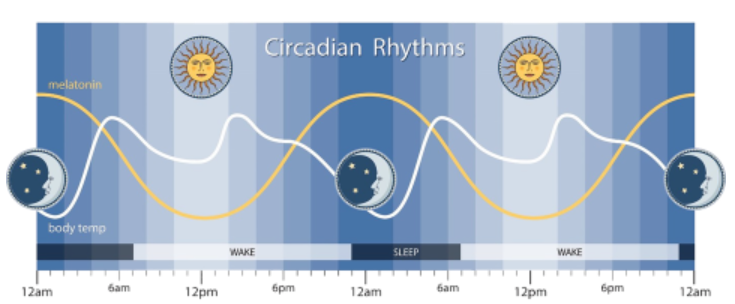
Fig. 1. Cicardian Rhythms and sleep-wake homeostasis
At the neurobiological level, sleep–wake transitions are explained by the flip-flop model of sleep regulation, in which sleep-promoting and wake-promoting neural circuits mutually inhibit each other. When wake-promoting neurons are active, they inhibit the VLPO and maintain alertness. Conversely, when the VLPO becomes active, it inhibits arousal systems and promotes sleep.
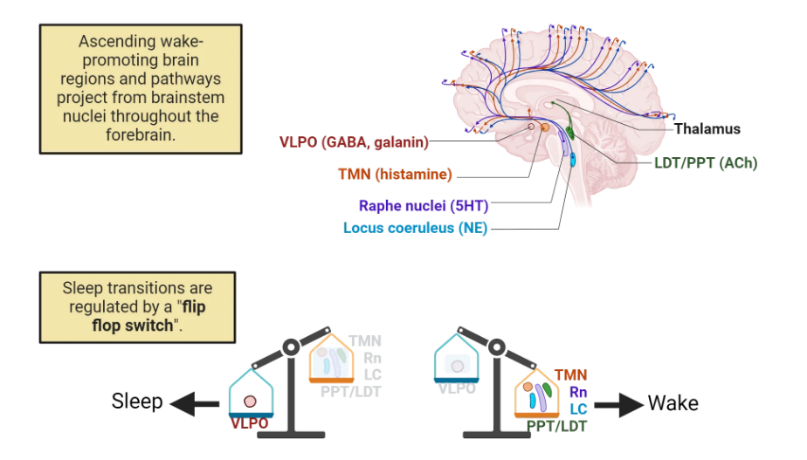
Fig. 2. Flip-flop switch
The flip-flop mechanism enables rapid and stable transitions between sleep and wake states, minimizing unstable intermediate states.
Sleep Architecture
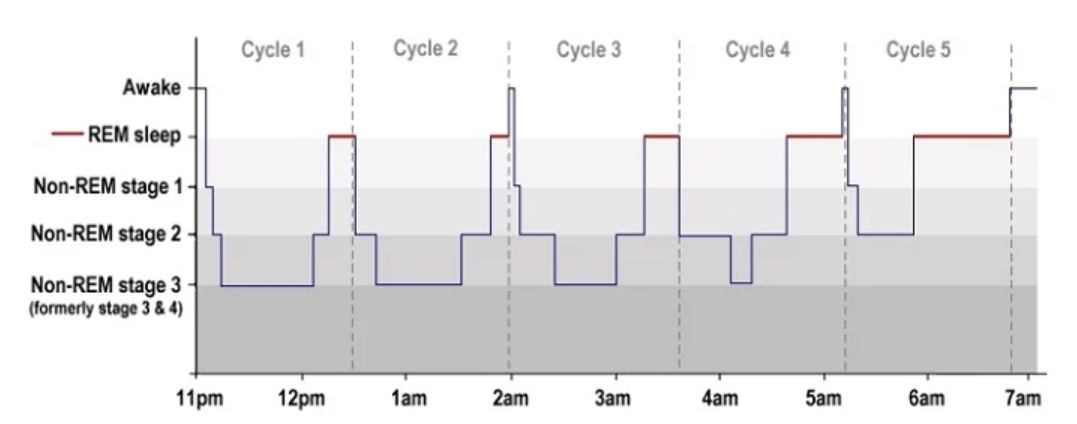
Fig. 3. Normal sleep architecture
Sleep architecture refers to the organized and predictable cyclical structure of sleep that alternates between two major phases: Non–Rapid Eye Movement (NREM) sleep and Rapid Eye Movement (REM) sleep. NREM accounts for approximately 75% to 80% of total sleep, and REM accounts for the remaining 20% to 25% of sleep. On average, a night of sleep consists of 4 to 5 repetitions of this cycle.
The details of sleep architecture is below:
Preservation of normal sleep architecture is essential for optimal physiological and neurological function. Disruptions to specific sleep stages—such as reduced deep NREM sleep or fragmented REM sleep—are associated with impaired recovery, cognitive dysfunction, and poor clinical outcomes, particularly in patients with insomnia or neurological disorders.
Importance of Sleep as Pillar of Health
Sleep is an active, highly regulated biological process that plays a fundamental role in maintaining brain function, physiological homeostasis, and overall health. It is governed by the interaction between homeostatic sleep drive and circadian rhythm, with sleep–wake transitions controlled at the neurobiological level by a flip-flop switch mechanism involving mutual inhibition between sleep- and wake-promoting neural circuits. This tightly coordinated system ensures stable sleep and wake states and preserves normal sleep architecture, which consists of cyclical transitions between NREM and REM sleep across the night.
Preservation of healthy sleep architecture is essential for physical restoration, cognitive performance, emotional regulation, and neural plasticity. Disruptions in sleep regulation—such as reduced deep NREM sleep, fragmented REM sleep, or unstable sleep–wake transitions—are associated with impaired recovery, cognitive dysfunction, and poorer clinical outcomes, particularly in patients with insomnia or neurological disorders. Recognizing sleep as a critical component of health underscores the importance of early identification and appropriate management of sleep disturbances as part of comprehensive patient care.
References: